
 Contact Us Now
Contact Us Now
Contact Us NowTable of Contents
Intersections are among the most dangerous locations on Fallbrook’s roads. Whether it’s the busy intersection of Highway 76 and Mission Road, the convergence of Old Highway 395 and Mission Road, or any of the numerous intersections throughout downtown Fallbrook, these crossroads require drivers to make split-second decisions while navigating conflicting traffic patterns. When drivers fail to exercise proper care at intersections, the results can be catastrophic.
If you’ve been injured in an intersection accident in Fallbrook, understanding your legal rights is crucial to recovering the compensation you deserve. At Lathrop Law, I have extensive experience handling complex intersection collision cases and know how to prove liability even when fault is disputed.
Intersection accidents account for approximately 40% of all car crashes and about 20% of fatal accidents nationwide. These crashes are particularly dangerous because they often involve vehicles traveling in perpendicular directions, resulting in high-impact collisions at vulnerable points on vehicles—particularly T-bone impacts that strike the driver or passenger doors where there’s minimal protection.
Several factors make Fallbrook’s intersections particularly hazardous. Highway 76 through Fallbrook experiences heavy traffic during commute hours, with drivers rushing to reach destinations and making risky decisions at intersections. The intersection of Highway 76 and Mission Road sees thousands of vehicles daily, creating numerous opportunities for collision. Old Highway 395 intersects with various local roads where visibility can be limited and speed limits change, catching drivers off guard.
Downtown Fallbrook’s intersections involve pedestrians, cyclists, turning vehicles, and through-traffic all converging in relatively small spaces. And during morning hours, fog can reduce visibility at intersections throughout the area, particularly on roads near agricultural areas.
Additionally, many Fallbrook intersections involve drivers unfamiliar with the area—tourists heading to Temecula wine country, people traveling through on Interstate 15, or new residents—who may not know the traffic patterns or timing of local signals.
Understanding what causes intersection accidents helps establish liability and prevent future crashes. The most common causes include:
Running Red Lights
Red light running is one of the most dangerous and inexcusable causes of intersection accidents. When a driver enters an intersection after the light has turned red, they’re likely to strike vehicles that have the right of way, often causing T-bone collisions at high speeds. According to the Insurance Institute for Highway Safety, red light running causes hundreds of deaths and tens of thousands of injuries nationwide each year.
Some drivers deliberately run red lights because they’re in a hurry or gambling that they can “make it through.” Others are distracted and don’t notice the signal has changed. Still others misjudge the timing and enter the intersection during the yellow light but don’t clear it before the light turns red.
California Vehicle Code Section 21453 makes it illegal to enter an intersection when facing a red signal. Violating this law establishes negligence per se—meaning the violation itself proves negligence without requiring additional evidence of carelessness.
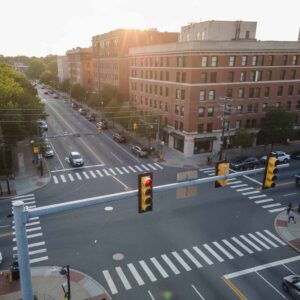
Failure to Yield Right of Way
Many intersection accidents occur when drivers fail to yield the right of way as required by law. This includes failing to yield when making left turns across oncoming traffic, not yielding to vehicles already in the intersection, failing to yield when entering from a stop sign, not yielding to pedestrians in crosswalks, and failing to yield to emergency vehicles.
California’s right-of-way laws are detailed and specific. Vehicle Code Section 21801 addresses left turns, Section 21802 covers entering intersections from stop signs, and numerous other sections govern various intersection scenarios. Violations of these laws establish liability when accidents result.
Distracted Driving
Intersections require heightened attention—drivers must watch traffic signals, monitor other vehicles, check for pedestrians, judge distances and speeds, and make quick decisions. Any distraction during this critical time can lead to disaster. Texting, phone calls, adjusting GPS or radio, eating, dealing with passengers, and any other attention-diverting activity dramatically increases intersection accident risk.
Improper Left Turns
Left turns across oncoming traffic are inherently risky, and drivers who misjudge gaps in traffic or fail to properly assess oncoming vehicle speeds cause serious accidents. Common left-turn errors include turning without yielding to oncoming traffic, misjudging the speed of approaching vehicles, failing to signal the turn, turning from the wrong lane, and making illegal left turns where prohibited.
When a left-turning driver causes an accident, they’re almost always found at fault because they have a duty to yield to oncoming traffic that has the right of way.
Speeding Through Intersections
Excessive speed reduces reaction time and increases both the likelihood of accidents and the severity of injuries when crashes occur. Drivers speeding through intersections may not be able to stop when lights change, may misjudge gaps when turning, may lose control during turns, and will cause more severe impacts when collisions occur.
Highway 76 through Fallbrook has posted speed limits for good reason—the road’s curves, intersections, and traffic patterns require appropriate speeds. Drivers who exceed these limits, particularly approaching intersections, create unreasonable risks for everyone.
Rolling Through Stop Signs
California law requires vehicles to come to a complete stop at stop signs—not slow down to a “California roll” but actually stop with wheels fully stopped. Drivers who roll through stop signs may enter intersections when it’s not safe, colliding with vehicles that have the right of way.
Poor Visibility and Obstructions
Some Fallbrook intersections have visibility challenges due to trees or vegetation blocking sightlines, buildings or structures near corners, parked vehicles obstructing views, sun glare at certain times of day, or inadequate lighting at night. While these conditions don’t excuse driver negligence, they may create situations where multiple parties share liability—including property owners or government entities responsible for maintaining safe conditions.
Intersection collisions take various forms, each with unique characteristics and injury patterns:
T-Bone or Side-Impact Collisions
These occur when the front of one vehicle strikes the side of another, creating a “T” shape. T-bone accidents are particularly dangerous because the struck vehicle’s side provides minimal protection—there’s less crumple zone to absorb impact forces compared to front or rear collisions. Occupants on the struck side face high injury risk including head injuries, chest and abdominal trauma, pelvic and leg fractures, and spinal injuries.
Head-On Collisions
While less common at intersections than T-bone accidents, head-on collisions can occur when turning drivers cross into oncoming traffic or when drivers enter intersections from the wrong direction. These are among the most deadly collision types due to the combined forces of both vehicles’ speeds.
Left-Turn Collisions
These typically involve a vehicle turning left across traffic lanes being struck by an oncoming vehicle with the right of way. The turning vehicle usually bears liability, though exceptions exist if the oncoming vehicle was speeding excessively or ran a red light.
Rear-End Collisions at Intersections
These occur when a vehicle strikes another from behind while both are stopped at or approaching an intersection. Common causes include distracted driving, following too closely, or failing to notice stopped traffic ahead.
Sideswipe Collisions
These happen when two vehicles traveling in the same general direction make contact along their sides, often when one vehicle attempts to change lanes or turn without checking blind spots. While sometimes less severe than other collision types, sideswipes can still cause serious injuries and may trigger multi-vehicle accidents.
Due to the nature of intersection collisions—often involving high speeds and impacts to vulnerable areas of vehicles—these accidents frequently result in serious injuries including traumatic brain injuries from head impacts, spinal cord injuries potentially causing paralysis, broken bones including pelvis, femur, ribs, and arms, internal organ damage from blunt force trauma, soft tissue injuries including severe whiplash, facial injuries and dental damage, and psychological trauma including PTSD and driving anxiety.
The severity of intersection accident injuries often means victims face extended medical treatment, permanent disabilities, inability to return to previous employment, and significantly diminished quality of life. Proper compensation must account for all these factors, including future medical needs and lost earning capacity.
While some intersection accidents involve clear liability—such as when a driver admittedly runs a red light—many involve disputed fault where each driver claims the other was responsible. Proving liability requires thorough investigation and evidence gathering.
Critical Evidence in Intersection Accident Cases
Police reports document officer observations, witness statements, and often include the officer’s determination of fault. While not definitive, police reports carry significant weight. Traffic signal timing records can prove whether a driver had a red or green light at the time of collision. Surveillance footage from nearby businesses, traffic cameras, or residential security systems can provide objective evidence of what happened. Witness testimony from people who saw the accident can corroborate your version of events. Vehicle damage patterns and location tell the story of the collision—expert accident reconstructionists can determine vehicle positions, speeds, and impact sequence from damage evidence. Cell phone records can prove a driver was texting or calling at the time of the accident. And the at-fault driver’s own statements to police or at the scene may constitute admissions of fault.
I make it a priority to canvass areas around accident scenes for surveillance footage. In one intersection accident case at Highway 76 and Mission Road, my client’s account was disputed by the other driver. However, a nearby business had security cameras that captured the entire intersection. The footage clearly showed the other driver running a red light. That evidence transformed a disputed liability case into a clear-cut victory.
California’s Comparative Negligence Law
Even when multiple drivers share fault for an intersection accident, California’s pure comparative negligence system allows you to recover damages reduced by your percentage of fault. For example, if you’re found 20% at fault and the other driver 80% at fault, you can recover 80% of your total damages.
Insurance companies often try to exaggerate your percentage of fault to reduce what they pay. Having an attorney who can effectively argue the true allocation of fault is crucial to maximizing your recovery.
While driver negligence causes most intersection accidents, other parties may sometimes share liability:
Government Entities
Cities, counties, or the state may be liable if dangerous road conditions contributed to the accident. This includes malfunctioning traffic signals, faded or missing pavement markings, obstructed traffic signs, inadequate lighting, or poor intersection design creating inherently dangerous conditions.
Claims against government entities in California require filing an administrative claim within six months of the accident—much shorter than the standard two-year statute of limitations for personal injury cases. Missing this deadline can forfeit your right to compensation from the government entity.
Third-Party Drivers
Sometimes a driver not directly involved in the collision bears partial responsibility. For example, a driver who ran a red light at a previous intersection may have forced you to swerve, causing you to enter another intersection unsafely. Or a driver who cut off another vehicle may have triggered a chain reaction leading to your collision.
Vehicle or Parts Manufacturers
If a vehicle defect contributed to the accident—such as brake failure, steering defects, or malfunctioning safety systems—the manufacturer may be liable under product liability laws. These cases require expert analysis to identify defects and prove they caused or contributed to the accident.
The steps you take immediately after an intersection accident affect both your safety and your legal claim. Call 911 immediately to report the accident and ensure police respond to document the scene. If you’re able and it’s safe, move vehicles out of the intersection to avoid blocking traffic and prevent additional collisions. Take photographs of all vehicle damage, the intersection including traffic signals and signs, any skid marks or debris, and the final resting positions of vehicles. Get contact information from all drivers involved and from any witnesses who saw the accident.
Seek immediate medical attention even if you feel fine—many serious injuries don’t present immediate symptoms. Do not apologize or make statements about fault at the scene—anything you say can be used against you later. Report the accident to your insurance company but keep your initial report brief and factual. Do not give recorded statements to other drivers’ insurance companies without legal representation.
Note the traffic signal status when the accident occurred—this is critical for proving right-of-way. If possible, identify any nearby surveillance cameras that might have captured the accident. Return to the scene later if necessary to canvass for witnesses and cameras.
Certain Fallbrook locations and conditions create unique issues in intersection accident cases:
Highway 76 Intersections
As the main route through Fallbrook, Highway 76 intersections see heavy traffic and numerous accidents. These state highway intersections may involve Caltrans liability if dangerous conditions contributed to accidents. Many drivers unfamiliar with the area are traveling through, which can complicate witness location and service of legal process.
Agricultural Area Intersections
Some Fallbrook intersections border agricultural properties where morning fog, dust, or smoke from burning can reduce visibility. Property owners may have liability if their activities contribute to dangerous conditions at nearby intersections.
School Zone Intersections
Intersections near Fallbrook schools have additional safety requirements and restrictions. Accidents in these areas may involve enhanced liability for drivers who violate school zone laws.
California gives you two years from the date of an intersection accident to file a personal injury lawsuit. However, if your accident involved a government entity (such as dangerous road conditions), you must file an administrative claim within six months. Don’t wait until deadlines approach—building a strong case takes time, especially when liability is disputed.
Intersection accidents often involve disputed liability, multiple parties, complex evidence analysis, and significant damages. An experienced attorney provides crucial advantages including conducting thorough investigations to gather all available evidence, working with accident reconstruction experts to prove fault, identifying all potentially liable parties including drivers, government entities, and others, accurately valuing claims including future damages, negotiating effectively with multiple insurance companies, and being prepared to take cases to trial when insurers won’t offer fair compensation.
Insurance companies know that intersection cases with disputed liability give them leverage to minimize settlements. They’re betting you’ll accept less than full value rather than face the uncertainty of trial. Having an attorney willing to fight changes this calculation entirely.
While you can’t control other drivers’ behavior, you can reduce your own intersection accident risk by approaching all intersections with heightened alertness, never assuming other drivers will obey signals or yield properly, looking both ways even when you have a green light, making eye contact with other drivers when possible, never running yellow lights—if there’s any doubt, stop, using turn signals well in advance, checking blind spots before changing lanes, eliminating all distractions when approaching and navigating intersections, and adjusting speed for visibility, weather, and traffic conditions.
Defensive driving at intersections has saved countless lives. Even when you have the right of way, being alert to other drivers’ mistakes can help you avoid collisions.
If you’ve been injured in an intersection accident in Fallbrook or anywhere in North San Diego County, you need an attorney who understands the complexities of these cases and knows how to prove fault even when the other side disputes liability. At Lathrop Law, I have the experience and resources to investigate intersection accidents thoroughly, gather compelling evidence, and fight for maximum compensation.
Whether your accident occurred at Highway 76 and Mission Road, Old Highway 395 and Mission Road, or any other Fallbrook intersection, I can help you navigate the legal process and hold negligent drivers accountable. As a bilingual attorney, I can assist you in English or Spanish, ensuring you fully understand your rights and options.
Don’t let insurance companies minimize your claim or blame you for an accident that wasn’t your fault. Contact us today for a free consultation. We work on a contingency fee basis—you pay nothing unless we recover compensation for you.
Intersection accidents can change your life in an instant. Let me help you get the justice and compensation you deserve.