Rebuilding After Wildfires in Los Angeles County
Wildfires have wreaked havoc on countless homes and businesses across Los Angeles County, leaving property owners struggling to...
Read more

 Contact Us Now

Suffering a serious injury at work can turn your life upside down in an instant. One moment you’re performing your regular duties, and the next you’re facing mounting medical bills, lost wages, and uncertainty about your future. What many injured workers in Fallbrook don’t realize is that workers’ compensation benefits may not be your only option for recovery. As an experienced work accident lawyer in Fallbrook, I’ve helped numerous clients pursue additional compensation through personal injury lawsuits against third parties when workers’ comp isn’t sufficient.
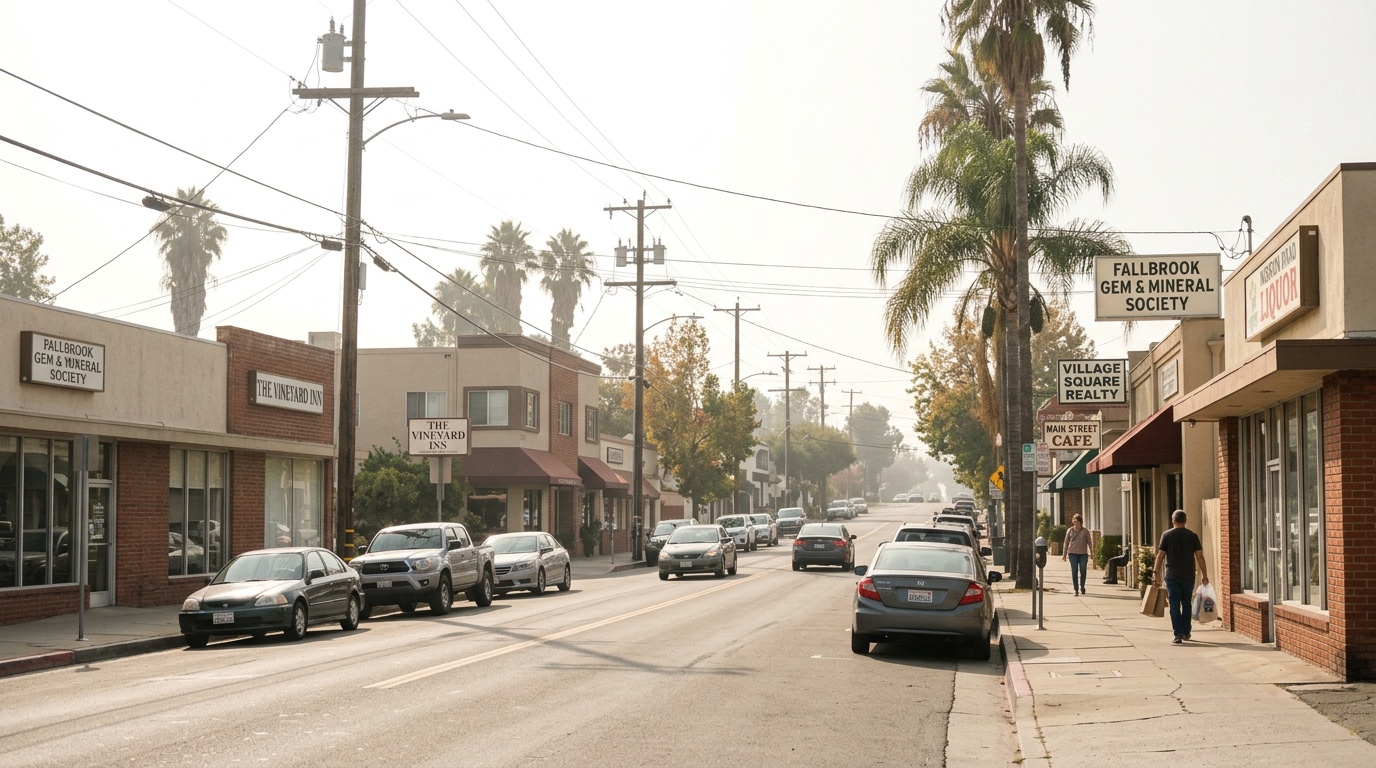
In my experience representing injured workers throughout North San Diego County, I’ve seen how devastating workplace accidents can be for families. From construction workers injured at job sites near Highway 76 to office workers hurt in parking lot accidents at businesses along Mission Road, workplace injuries affect people from all walks of life. The key is understanding when workers’ comp is sufficient and when you need additional legal action to fully protect your rights.
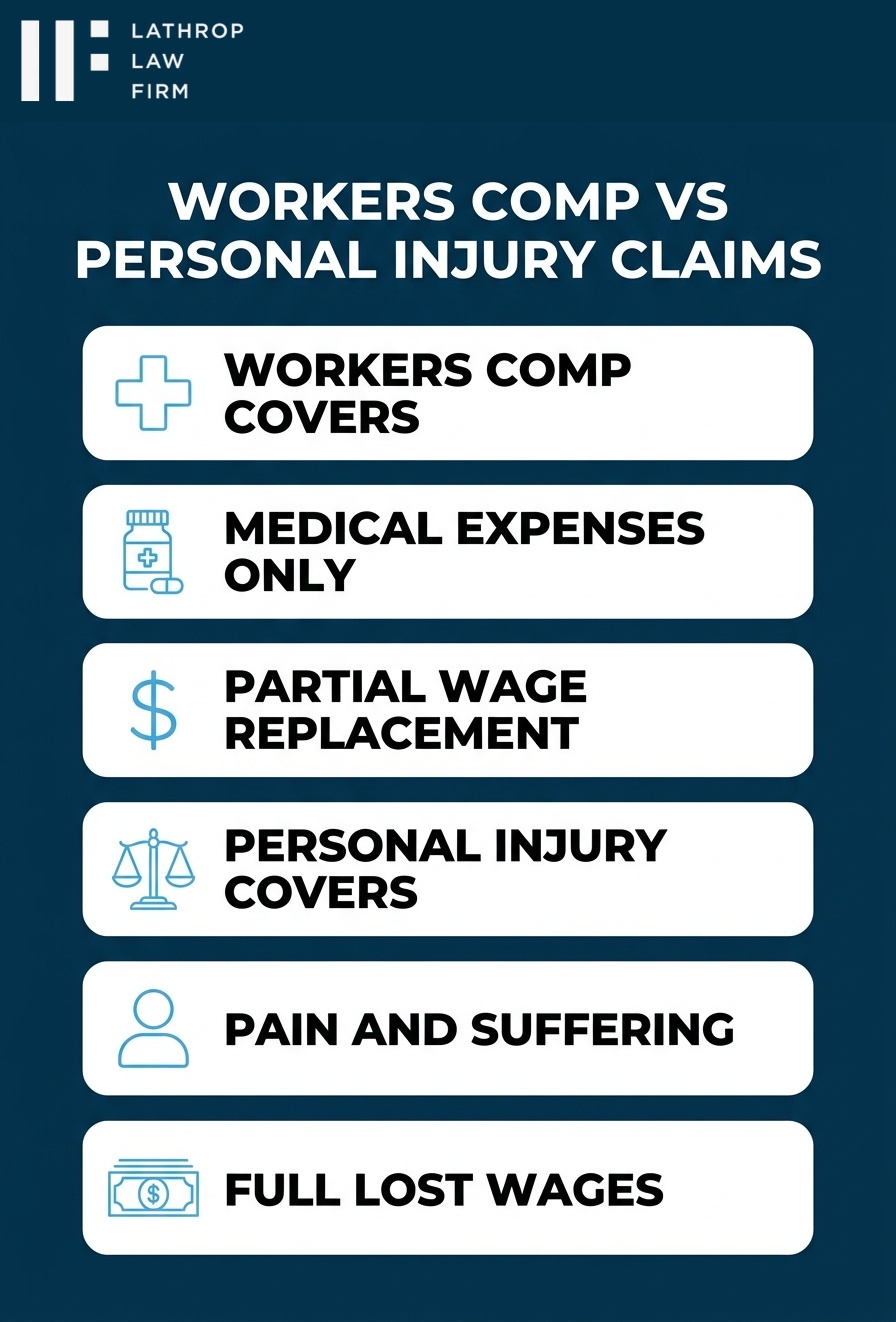
Workers’ compensation is a no-fault insurance system that provides medical coverage and partial wage replacement when you’re injured on the job. In exchange for these guaranteed benefits, you generally cannot sue your employer for workplace injuries. However, this limitation only applies to claims against your direct employer.
What many people don’t realize is that you may be able to pursue a personal injury lawsuit against third parties whose negligence contributed to your workplace accident. These third-party claims are not subject to workers’ compensation limitations and can provide compensation for damages that workers’ comp doesn’t cover, including pain and suffering, full lost wages, and punitive damages.
Third parties who might be liable for workplace accidents include:
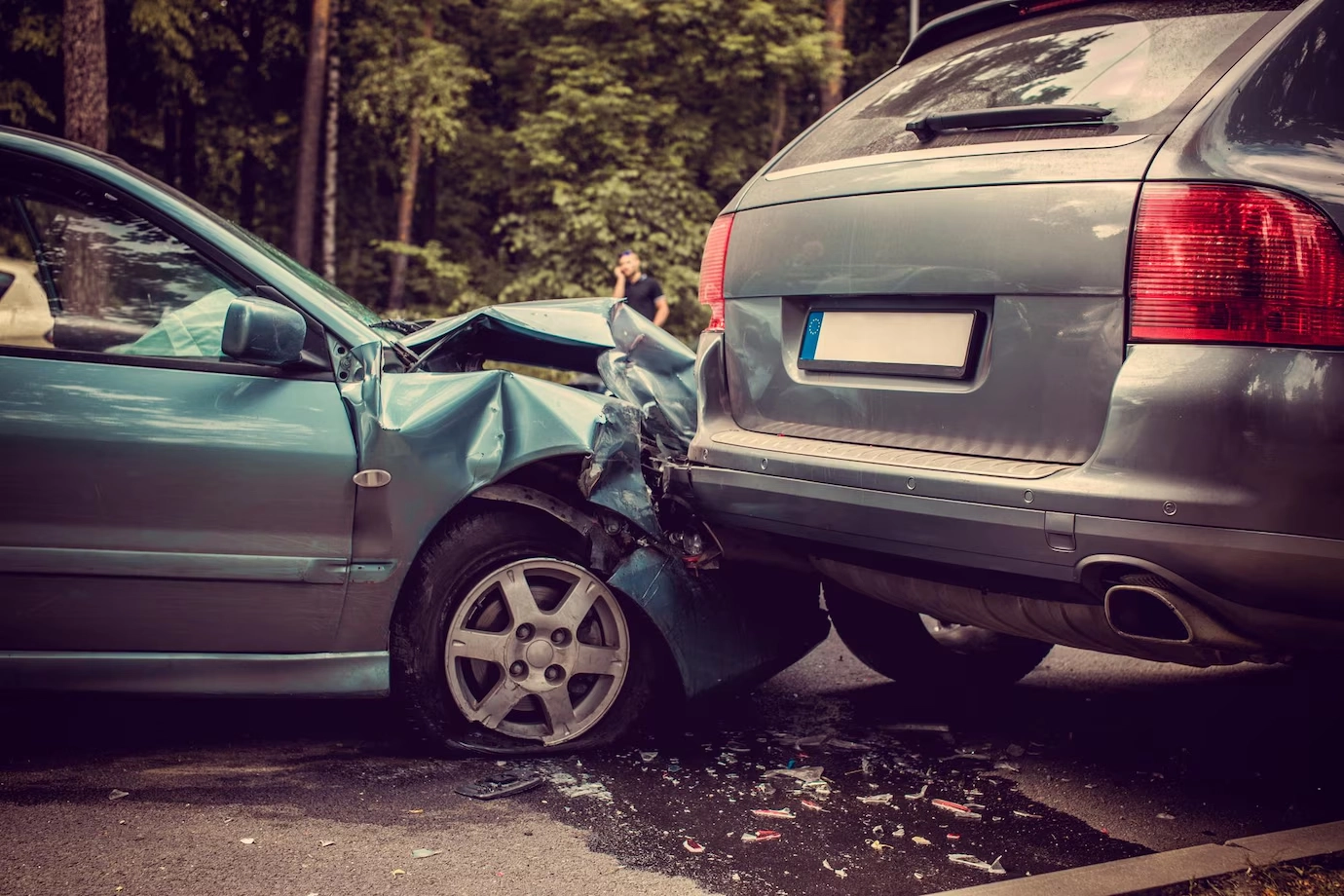
As a Fallbrook car accident attorney, I often handle cases where work-related vehicle accidents involve third-party liability, particularly for workers who drive as part of their job duties along busy routes like Highway 76 and Interstate 15.
Fallbrook’s diverse economy creates various workplace hazards that can result in serious injuries. Understanding these common accident types helps identify when third-party liability may exist.
Construction Site Accidents
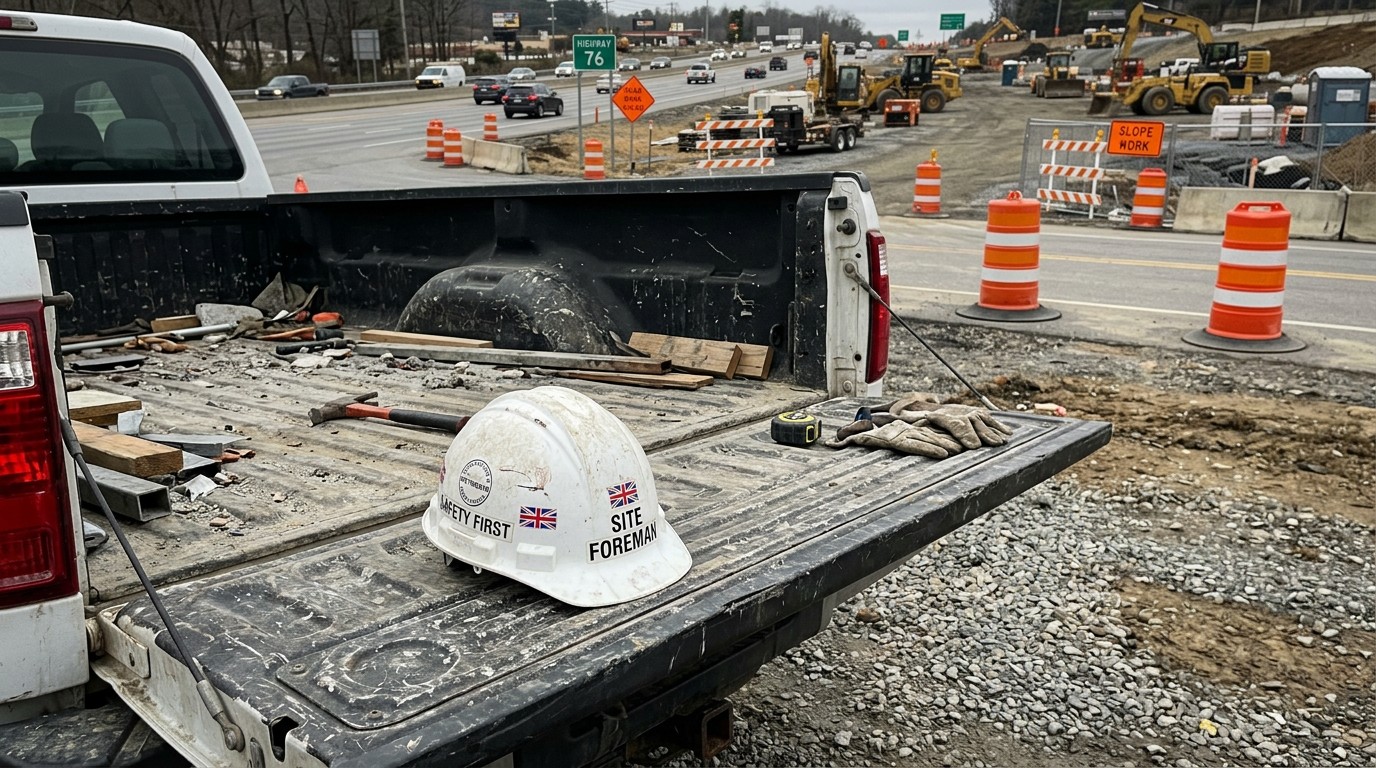
Construction work remains one of the most dangerous industries, with workers facing risks from falls, equipment failures, and exposure to hazardous materials. Many construction sites in Fallbrook involve multiple contractors working simultaneously, creating opportunities for third-party liability claims when one contractor’s negligence injures workers employed by another company.
Consider a scenario where a construction worker is injured when scaffolding collapses at a job site near the intersection of Highway 76 and Old Highway 395. If the scaffolding was installed by a different contractor than the worker’s employer, and that contractor failed to follow proper safety protocols under California Code of Regulations Title 8, Section 1637, the injured worker may have both workers’ compensation benefits and a personal injury claim against the negligent contractor for full damages including pain and suffering.
Vehicle Accidents During Work
Workers who drive as part of their job duties face significant accident risks, especially on busy Fallbrook roads like Highway 76 during rush hour traffic or Old Highway 395 with its frequent speed limit changes. Delivery drivers, sales representatives, and service technicians are particularly vulnerable to serious injuries in work-related vehicle accidents.
Imagine a delivery driver making rounds through Downtown Fallbrook who suffers a traumatic brain injury when another driver runs a red light at the intersection of Mission Road and Main Avenue. The injured worker would be entitled to workers’ compensation benefits for medical treatment and partial wage replacement, plus a personal injury claim against the at-fault driver for pain and suffering, full lost wages, and other damages not covered by workers’ comp. California Vehicle Code Section 21453 establishes liability for drivers who violate traffic signals, providing a clear basis for the third-party claim.
Premises Liability Accidents
Workers performing services at customer locations or job sites they don’t control may be injured due to dangerous property conditions. For example, a delivery driver might slip and fall on an icy walkway at a business along Mission Road, or a repair technician might be injured by inadequate lighting in a customer’s facility.
These accidents often involve premises liability claims against property owners who failed to maintain safe conditions or warn workers about known hazards under California Civil Code Section 1714.
Identifying third-party liability requires careful analysis of the accident circumstances and all potentially responsible parties. Here’s what you need to know about when additional claims may be possible:
Multi-Employer Worksites
Many workplace accidents occur at locations where multiple employers have workers present simultaneously. Construction sites, industrial facilities, and large commercial properties often involve numerous contractors and subcontractors working in close proximity.
California Labor Code Section 3700 requires all employers to carry workers’ compensation insurance, but when one employer’s negligence injures workers employed by another company, the injured worker may pursue both workers’ compensation from their own employer and a personal injury claim against the negligent third-party employer.
Defective Equipment and Tools
When workplace injuries result from defective equipment, tools, or machinery, product liability claims may exist against manufacturers, distributors, or retailers. These claims are particularly valuable because they often involve significant damages and clear liability when design defects or manufacturing flaws are proven.
Product liability claims complement workers’ compensation benefits and can provide compensation for pain and suffering, which workers’ comp doesn’t cover. California’s strict product liability laws, established in cases like Greenman v. Yuba Power Products, make it easier to hold manufacturers accountable for defective products.
Motor Vehicle Accidents
Work-related vehicle accidents present unique opportunities for dual recovery. Workers injured in vehicle accidents while performing job duties typically receive workers’ compensation benefits, but they can also pursue personal injury claims against at-fault drivers.
One of the most common situations I see is delivery drivers or service technicians injured in accidents on Interstate 15 or Highway 76 while traveling between job sites. When another driver causes the accident through negligence like distracted driving or DUI, that driver’s auto insurance becomes liable for damages not covered by workers’ compensation.
Certain workplace injuries are so severe that workers’ compensation benefits alone cannot adequately compensate victims for their losses. These cases particularly benefit from third-party personal injury claims that can provide full compensation.
Spinal Cord Injuries and Paralysis
Spinal cord injuries from falls, equipment accidents, or vehicle crashes can result in permanent paralysis requiring lifetime medical care and assistance with daily activities. Workers’ compensation provides medical coverage and partial wage replacement, but it doesn’t compensate for the profound impact these injuries have on quality of life.
Third-party personal injury claims can recover compensation for pain and suffering, loss of enjoyment of life, and the full economic impact of permanent disability. For young workers facing decades of paralysis, these additional damages can amount to millions of dollars.
Traumatic Brain Injuries
Brain injuries from construction accidents, falls, or vehicle crashes often result in cognitive impairment, personality changes, and inability to return to previous employment. These injuries affect not only the victim but their entire family, as loved ones may need to provide ongoing care and supervision.
While workers’ compensation covers medical treatment and provides disability benefits, it cannot adequately compensate for the devastating personal impact of traumatic brain injury. Third-party claims allow recovery for non-economic damages that reflect the true cost of these life-altering injuries.
Severe Burns and Amputations
Industrial accidents involving machinery, chemicals, or electrical equipment can cause severe burns or traumatic amputations requiring multiple surgeries and extensive rehabilitation. These injuries often result in permanent disfigurement and disability that affects victims’ ability to work and participate in activities they previously enjoyed.
Third-party liability claims provide additional compensation for the pain, suffering, and loss of enjoyment these injuries cause, supplementing workers’ compensation benefits to provide more complete recovery.
Understanding the relationship between workers’ compensation and third-party personal injury claims is crucial for maximizing your recovery while avoiding legal complications.
Dual Recovery Rights
California law specifically allows injured workers to pursue both workers’ compensation benefits and third-party personal injury claims simultaneously. This dual recovery system recognizes that workers’ compensation provides limited benefits in exchange for guaranteed coverage, while third-party claims can provide full compensation when other parties share responsibility for workplace accidents.
However, California Labor Code Section 3864 requires that workers’ compensation carriers receive reimbursement from third-party settlements for benefits they’ve paid. This reimbursement right, known as subrogation, must be considered when negotiating third-party settlements.
Coordinating Claims for Maximum Recovery
Successful coordination of workers’ compensation and third-party claims requires careful timing and strategy. Filing workers’ compensation claims immediately ensures medical coverage and wage replacement while third-party claims are developed. However, the subrogation right must be negotiated to maximize your net recovery.
In my experience handling these complex cases, the key is working with the workers’ compensation carrier early in the process to understand their lien amount and negotiate reductions based on the costs and risks of pursuing the third-party claim.
Different deadlines apply to workers’ compensation and third-party personal injury claims, making prompt legal action essential.
Workers’ Compensation Deadlines
California Labor Code Section 5405 generally requires that workers’ compensation claims be filed within one year of the injury date, or within one year of when you knew or should have known the injury was work-related. For occupational diseases that develop gradually, different rules may apply.
Missing these deadlines can result in complete loss of workers’ compensation benefits, making immediate action crucial after workplace injuries.
Third-Party Personal Injury Deadlines
Code of Civil Procedure Section 335.1 establishes a two-year statute of limitations for most personal injury claims in California. This deadline applies to third-party claims arising from workplace accidents, regardless of when workers’ compensation claims are filed.
For vehicle accidents involving work-related injuries, the two-year deadline runs from the accident date. However, property damage claims have a three-year deadline under CCP Section 338(c), which may be relevant for damage to work vehicles or equipment.
Successfully pursuing third-party claims requires proving that someone other than your employer was negligent and that their negligence contributed to your injuries.
Investigation and Evidence Collection
Workplace accident investigations must be conducted quickly before evidence is lost or destroyed. Key evidence includes accident scene photographs, witness statements, equipment inspection records, and safety training documentation.
For vehicle accidents occurring during work, police reports from the San Diego County Sheriff’s Department provide crucial evidence of fault determination. Traffic cameras along busy routes like Highway 76 may capture accident footage that proves liability.
Expert Analysis
Complex workplace accidents often require expert analysis to establish liability and prove the full extent of damages. Accident reconstruction experts can analyze vehicle collisions, while safety experts can identify violations of OSHA regulations or industry safety standards.
Medical experts play a crucial role in proving the connection between workplace accidents and resulting injuries, particularly for conditions like traumatic brain injury that may not manifest symptoms immediately.
Third-party work accident claims face unique challenges that require experienced legal representation to overcome.
Insurance Company Tactics
Insurance companies defending third-party work accident claims often attempt to shift blame to the injured worker’s employer or argue that workers’ compensation is the exclusive remedy. These arguments ignore the legal right to pursue third-party claims and attempt to minimize the insurance company’s financial exposure.
Another common tactic is arguing that the injured worker was performing inherently dangerous activities or violated safety protocols. While comparative negligence principles may reduce recovery, they don’t eliminate third-party liability when other parties share responsibility for accidents.
Coordination with Workers’ Compensation
Balancing workers’ compensation benefits with third-party claims requires careful coordination to avoid jeopardizing either claim. Some workers’ compensation carriers may attempt to influence third-party settlements to maximize their subrogation recovery, potentially conflicting with the injured worker’s best interests.
Effective representation includes advocating for the injured worker’s interests in both claims while ensuring compliance with legal requirements for both systems.
Third-party personal injury claims provide compensation for damages that workers’ compensation doesn’t cover, making them particularly valuable for seriously injured workers.
Economic Damages
While workers’ compensation typically pays only two-thirds of lost wages, third-party claims can recover full lost wages and lost earning capacity. For high-earning workers or those with decades of remaining work life, this difference can be substantial.
Medical expenses are typically covered by workers’ compensation, but third-party claims can recover costs for treatment not covered by workers’ comp, including experimental treatments or care from specialists outside the workers’ compensation network.
Non-Economic Damages
Pain and suffering compensation is not available through workers’ compensation but can be recovered in third-party claims. For severe injuries like spinal cord damage or traumatic brain injury, pain and suffering damages often represent the largest component of recovery.
Loss of enjoyment of life, emotional distress, and loss of consortium for spouses are additional non-economic damages available only through third-party claims.
The complexity of coordinating workers’ compensation and third-party personal injury claims makes experienced legal representation essential for protecting your rights and maximizing your recovery.
As a catastrophic injury lawyer practicing in Fallbrook, I understand the unique challenges facing injured workers and their families. From construction accidents near downtown Fallbrook to vehicle crashes on Interstate 15, I’ve seen how workplace injuries can devastate families financially and emotionally.
The law is clear that injured workers have the right to pursue all available compensation, but insurance companies and employers often attempt to limit recovery to workers’ compensation benefits alone. Having an attorney who understands both workers’ compensation and personal injury law ensures that all potential sources of compensation are identified and pursued.
One of the most common situations I see is injured workers who accepted workers’ compensation benefits without realizing they had viable third-party claims. By the time they discover their additional rights, crucial evidence may be lost and deadlines may have passed, permanently limiting their recovery options.
My approach includes thorough investigation of all circumstances surrounding workplace accidents, identification of all potentially liable parties, and aggressive pursuit of maximum compensation from all available sources. Whether your accident involved defective equipment from a manufacturer, negligence by another contractor at a Pico Plaza construction site, or a vehicle collision on Highway 76, I’ll fight to ensure you receive every dollar you’re entitled to under California law.
If you’ve been injured in a workplace accident in Fallbrook or anywhere in North San Diego County, don’t assume that workers’ compensation is your only option for recovery. Third-party liability claims can provide additional compensation that makes a real difference in your recovery and your family’s financial security.
As a bilingual attorney serving the Fallbrook community, I can assist you in English or Spanish, ensuring you fully understand your rights and options. Whether your accident occurred at a construction site near Mission Road, during a delivery on Highway 76, or at any workplace in our community, I’ll thoroughly investigate all potential sources of compensation and fight to protect your rights.
Don’t let insurance companies convince you to settle for less than you deserve. Contact Lathrop Law today for a free consultation. I work on a contingency fee basis for personal injury claims, which means you pay no attorney fees unless I recover compensation for you. Your focus should be on healing from your injuries, not fighting insurance companies. Let me handle the legal complexities while you concentrate on your recovery.
Call my Fallbrook personal injury law office at (951) 394-8673 or visit our law firm website to schedule your free case evaluation today.