Rebuilding After Wildfires in Los Angeles County
Wildfires have wreaked havoc on countless homes and businesses across Los Angeles County, leaving property owners struggling to...
Read more

 Contact Us Now



A spinal cord injury from a car accident changes everything in an instant. The devastating impact reaches far beyond the initial trauma, creating a cascade of medical needs, daily care requirements, and financial obligations that can last a lifetime. As an attorney who has handled catastrophic injury cases throughout Fallbrook and North San Diego County, I understand the overwhelming reality families face when dealing with spinal cord injuries from car accidents lifetime costs compensation.
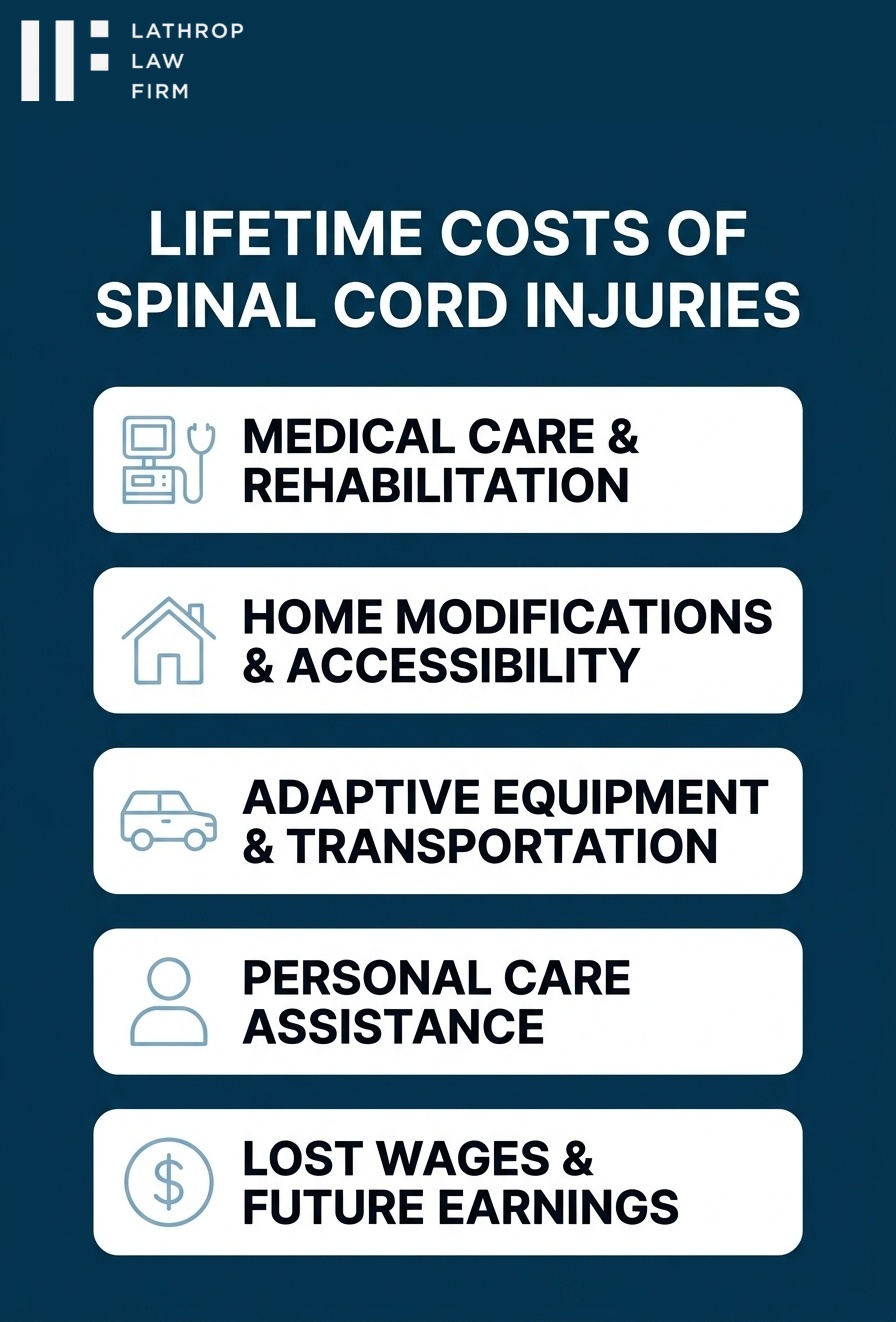
The true cost of a spinal cord injury extends decades into the future. Medical bills alone can reach millions of dollars over a patient’s lifetime, not including lost wages, home modifications, assistive equipment, and round-the-clock care. California law recognizes these extensive damages and provides pathways for injured victims to secure the compensation they need to rebuild their lives with dignity.
Spinal cord injuries occur when trauma damages the delicate nerve tissue within the spinal column. In car accidents, these injuries typically result from the violent forces that throw the body in multiple directions during impact. The spinal cord, which carries messages between the brain and the rest of the body, becomes compressed, severed, or bruised.
Complete spinal cord injuries result in total loss of sensation and movement below the injury site. Incomplete injuries allow for some preserved function, though the extent varies significantly. The location of the injury determines which body systems are affected. Cervical injuries, occurring in the neck region, often cause quadriplegia affecting all four limbs. Thoracic and lumbar injuries typically result in paraplegia, affecting the lower body.
High-speed collisions on Highway 76 during heavy commute traffic create particularly dangerous conditions for spinal injuries. The combination of steep curves, limited visibility, and vehicles traveling at 55+ mph means that when accidents occur, the forces involved can be catastrophic. T-bone collisions at intersections like Mission Road and Ammunition Road also pose significant risks, as the lateral forces can cause severe twisting and compression of the spine.
In my experience representing spinal cord injury victims, I’ve seen how quickly these injuries can occur and how dramatically they alter every aspect of a person’s life. The initial emergency room visit is just the beginning of what becomes a lifelong medical journey requiring specialized care, rehabilitation, and adaptive equipment.
The financial impact begins in the emergency room and intensive care unit. Spinal cord injury patients typically require immediate surgical intervention to stabilize the spine and prevent further damage. These initial procedures can cost between $150,000 and $500,000, depending on the complexity and extent of the injury.
Emergency treatment includes spinal fusion surgery, insertion of rods and screws, decompression procedures, and extensive diagnostic imaging. Patients often spend weeks in intensive care units, where daily costs can exceed $10,000. The initial hospitalization alone frequently reaches $200,000 to $800,000.
Following acute care, patients require months of inpatient rehabilitation at specialized spinal cord injury centers. These facilities provide intensive physical therapy, occupational therapy, and training on adaptive equipment use. Rehabilitation stays typically last 3-6 months and cost $2,000-4,000 per day.
Consider a situation where a driver suffers a complete T12 spinal cord injury after a rear-end collision on Old Highway 395. The initial emergency treatment, surgery, and three-month rehabilitation stay could easily exceed $1 million before the patient even returns home. This represents just the beginning of a lifetime of medical expenses that California Vehicle Code Section 17150 allows victims to recover from negligent drivers.
Spinal cord injuries require lifelong medical management to prevent complications and maintain health. Annual medical costs for paraplegia typically range from $70,000 to $120,000, while quadriplegia can require $150,000 to $300,000 annually in medical care.
Regular medical expenses include urological care to prevent kidney problems, respiratory therapy for high-level injuries, pressure sore prevention and treatment, pain management, and management of spasticity and autonomic dysreflexia. Many patients require regular procedures such as botox injections for spasticity, surgical revision of pressure sores, and treatment of recurring infections.
Medications alone can cost $20,000-40,000 annually, including antibiotics for recurring infections, pain medications, muscle relaxants, and specialized drugs to manage autonomic functions. Medical equipment replacement is also ongoing, as wheelchairs, cushions, and other devices require regular maintenance and replacement.
Physical and occupational therapy remains important throughout a patient’s life to maintain function and prevent complications. Many insurance companies limit therapy sessions, leaving patients to pay out-of-pocket for continued care that can cost $200-300 per session.
Returning home after a spinal cord injury typically requires extensive modifications to make the residence accessible. These modifications represent a significant upfront cost that many families struggle to afford while dealing with mounting medical bills.
Essential home modifications include wheelchair ramps with proper grade and materials ($3,000-15,000), widened doorways throughout the home ($500-1,500 per doorway), accessible bathrooms with roll-in showers ($15,000-35,000), and lowered countertops and cabinets in kitchens ($10,000-25,000).
Many patients require elevator installations or stair lifts to access second floors, costing $15,000-50,000. Flooring must often be replaced with smooth, wheelchair-friendly surfaces throughout the home. Smart home technology for controlling lights, temperature, and security systems becomes essential for patients with limited hand function.
High-quality wheelchairs are crucial for mobility and health. Manual wheelchairs designed for spinal cord injury patients cost $3,000-8,000, while power wheelchairs range from $15,000-40,000. Many patients require multiple wheelchairs for different activities and environments. Specialized seating systems to prevent pressure sores add another $5,000-15,000.
Vehicle modifications allow patients to maintain independence and return to work. Hand controls, wheelchair lifts, and driving adaptations can cost $15,000-60,000 depending on the extent of modifications needed.
Spinal cord injuries dramatically impact earning capacity, creating substantial economic losses that extend throughout a person’s working years. The extent of income loss depends on the level of injury, the person’s occupation, education level, and pre-injury earnings.
Many spinal cord injury patients cannot return to their previous occupations, particularly those involving physical labor, extensive travel, or jobs without accommodation for disabilities. Even office workers may face challenges if their employers cannot or will not provide reasonable accommodations.
For a 35-year-old construction worker earning $65,000 annually who suffers a complete thoracic spinal cord injury, the lifetime lost earnings could exceed $1.5 million when accounting for wage growth and career advancement opportunities. Professional workers with higher pre-injury earnings face even greater economic losses.
Some patients can return to modified work arrangements or pursue new careers suited to their abilities. However, this often requires extensive retraining and may result in significantly lower earnings than their pre-injury capacity. Vocational rehabilitation and retraining programs help but represent additional costs during the transition period.
Beyond lost wages, spinal cord injury patients lose employment benefits including health insurance, retirement contributions, and disability coverage. These benefit losses add substantially to the overall economic impact of the injury.
One of the most significant ongoing expenses for spinal cord injury patients is personal care assistance. The level of care needed depends on the completeness and location of the injury, but costs can be staggering over a lifetime.
Patients with high-level injuries requiring 24-hour care may need $8,000-15,000 monthly in attendant care services. Even patients with incomplete injuries often require several hours of daily assistance with activities like bathing, dressing, meal preparation, and household tasks.
Professional care agencies charge $25-40 per hour for trained attendants. Private-duty nurses for patients with complex medical needs cost $35-60 per hour. Many families provide care themselves initially but find the physical and emotional demands unsustainable long-term.
The Christopher and Dana Reeve Foundation estimates that lifetime costs for spinal cord injury patients range from $2.4 million for incomplete motor function injuries to $5.1 million for high tetraplegia. These figures include medical care, equipment, home modifications, and attendant care over an average lifespan.
In California, where healthcare costs exceed national averages, these lifetime projections often underestimate actual expenses. Patients living in expensive areas like North San Diego County face even higher costs for housing modifications, attendant care, and medical services. Understanding these projections becomes crucial when negotiating with insurance companies who know the true scope of catastrophic injury damages.
While spinal cord injuries require extensive medical care and support services, insurance coverage often falls short of providing adequate compensation for all necessary expenses. Understanding these limitations is crucial for injury victims and their families.
Health insurance policies typically have annual and lifetime caps that can be quickly exhausted by spinal cord injury treatment. Many policies limit rehabilitation services, durable medical equipment, and home modifications. Insurance companies frequently deny coverage for experimental treatments or newer technologies that could improve patient outcomes.
Workers’ compensation may provide benefits if the injury occurred during employment, but these benefits are often insufficient to cover the full scope of damages. Workers’ comp typically doesn’t cover pain and suffering or the full extent of lost future earnings.
Personal injury protection (PIP) coverage in auto insurance policies provides immediate benefits but is usually limited to $15,000-50,000. This amount may cover initial emergency treatment but represents a fraction of lifetime care costs.
Government programs like Medicare and Medicaid may provide some coverage but have strict eligibility requirements and often cover only basic equipment and services. Many adaptive technologies and home modifications are not covered by government insurance programs.
These coverage gaps make it essential for spinal cord injury patients to pursue full compensation through personal injury claims against responsible parties. Only through comprehensive legal action can patients secure the resources needed for optimal care and quality of life.
Calculating fair compensation for spinal cord injuries requires thorough documentation of both current and future needs. As a Fallbrook attorney who handles these complex cases, I work with medical experts, economists, and life care planners to build comprehensive damage claims for spinal cord injuries from car accidents lifetime costs compensation.
Economic damages include all quantifiable financial losses: past and future medical expenses, lost wages and earning capacity, attendant care costs, home and vehicle modifications, and specialized equipment needs. These calculations require detailed analysis of medical records, employment history, and expert testimony about future care requirements.
Non-economic damages compensate for pain and suffering, emotional distress, loss of enjoyment of life, and loss of consortium for spouses. While more difficult to quantify, these damages recognize the profound impact spinal cord injuries have on all aspects of a person’s life and relationships.
Life care plans prepared by certified specialists detail all anticipated medical and care needs over a patient’s projected lifespan. These comprehensive documents account for inflation, changing medical needs, and replacement of equipment and home modifications. Proper life care planning ensures that settlement negotiations address the full scope of lifetime needs.
Economic experts calculate lost earning capacity by analyzing pre-injury income, career trajectory, education, and skills. They factor in wage growth, benefits, and career advancement opportunities that the injury has eliminated. These calculations often reveal millions in lost economic potential.
Gathering evidence requires immediate action while medical records are being created and witness memories remain fresh. Preserving the accident scene, obtaining police reports, and documenting the full extent of injuries becomes crucial for building strong cases.
California law provides important protections for spinal cord injury victims pursuing compensation through personal injury claims. Understanding these legal principles helps families navigate the complex litigation process.
Under California’s pure comparative negligence system outlined in Civil Code Section 1431.2, injury victims can recover compensation even if they bear some responsibility for the accident. Each party pays only their proportionate share of non-economic damages, protecting catastrophically injured plaintiffs from unfair reduction of their awards.
California Civil Procedure Code Section 335.1 establishes a two-year statute of limitations for personal injury claims. However, discovery of the full extent of spinal cord injuries and their long-term implications may extend this deadline in some cases. Given the complexity of these cases, prompt legal action is essential.
The state’s joint and several liability rules hold multiple defendants fully responsible for economic damages when their negligence contributes to an injury. This protection ensures that catastrophically injured plaintiffs can collect full compensation even if one defendant lacks insurance or assets.
California courts recognize the need for future medical care and have established procedures for ensuring that settlement funds remain available for lifetime needs. Structured settlements and special needs trusts protect injury victims from losing government benefits while providing for ongoing care.
Insurance bad faith laws provide additional remedies when insurance companies unreasonably delay or deny coverage for spinal cord injury treatment. These statutes allow injured parties to seek punitive damages and attorney fees when insurers act in bad faith.
Spinal cord injury cases present unique legal and medical challenges that require specialized knowledge and resources. Insurance companies understand the devastating financial impact of these injuries and employ teams of lawyers and experts to minimize their exposure.
An experienced spinal cord injury attorney has relationships with the medical specialists, economists, and life care planners needed to properly evaluate and present these complex cases. We understand how to work with rehabilitation hospitals, equipment suppliers, and construction contractors to accurately project lifetime costs.
Insurance companies often make quick settlement offers that may seem substantial but represent only a fraction of actual lifetime costs. Without proper legal representation, families may accept settlements that leave them financially vulnerable as medical needs increase over time.
The litigation process for spinal cord injury cases can take several years due to their complexity. Experienced attorneys understand how to secure interim funding for immediate medical needs while building comprehensive cases for maximum recovery.
As a bilingual attorney serving Fallbrook and North San Diego County, I understand the unique challenges faced by Spanish-speaking families dealing with catastrophic injuries. I can communicate directly with clients and their families, ensuring they understand their rights and the legal process. From the Fallbrook Community Center area to downtown Fallbrook, I serve families throughout our community who need experienced advocacy.
If you or a loved one has suffered a spinal cord injury in a car accident, time is critical for protecting your rights and securing the compensation you need. The decisions made in the weeks following your injury will impact your family for decades to come.
I understand the overwhelming challenges you’re facing and the uncertainty about your future. As an experienced personal injury attorney in Fallbrook, I have the resources and expertise necessary to handle complex spinal cord injury cases against major insurance companies and their teams of lawyers.
Whether you speak English or Spanish (hablo español), I can help you understand your legal options and build a comprehensive case for full compensation. I work on a contingency fee basis, meaning you pay no attorney fees unless we recover compensation for your case.
Don’t let insurance companies take advantage of your difficult situation with inadequate settlement offers. Contact my office today for a free consultation to discuss your spinal cord injury case and learn how I can help secure your family’s financial future.